
Travel Tips & FAQ
Health, safety, packing and practical guidance for visiting Tavolo.
Ask a QuestionEssential Travel Information
Tavolo is a remote, tropical destination requiring proper preparation. This guide covers health, safety, packing, and practical information for a successful visit.
Health & Vaccinations
Papua New Guinea has different health risks than most Western countries. Proper preparation prevents illness and ensures you can fully enjoy your visit.
Recommended Vaccinations:
- Yellow Fever: Recommended for most travelers; some countries require proof for entry
- Hepatitis A: Protection against food/water-borne virus
- Hepatitis B: Consider if extended travel or high-risk activities
- Tetanus/Diphtheria: Standard for travel anywhere
- Typhoid: Recommended for remote areas with limited medical infrastructure
- Japanese Encephalitis: Consider if extended visit; rare but serious
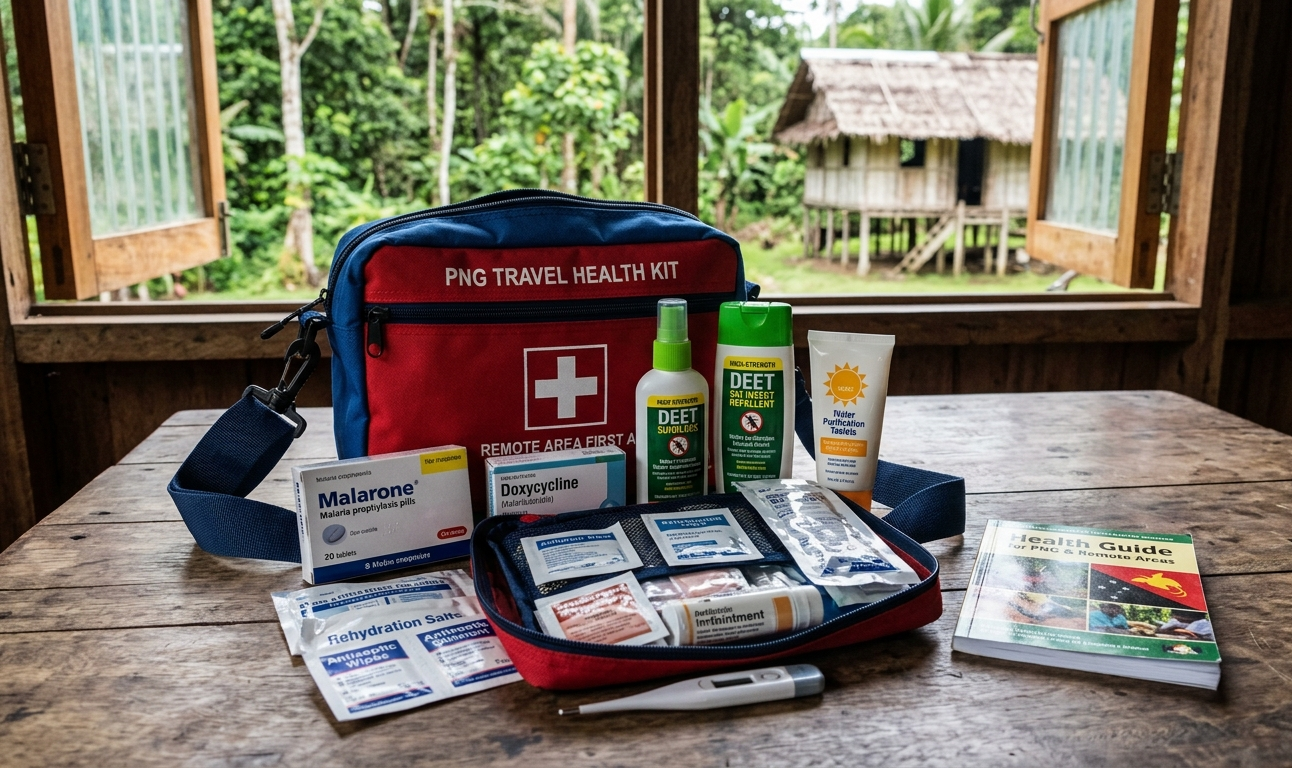
Malaria Prophylaxis: East New Britain has malaria risk. Oral prophylaxis or other prevention methods recommended. Consult travel medicine specialist 4-6 weeks before travel.
Dengue & Other Diseases: Mosquito-borne dengue fever occurs in PNG. Mosquito avoidance is critical - use repellent, wear long clothes during dawn/dusk, and sleep under mosquito nets.
Packing Checklist
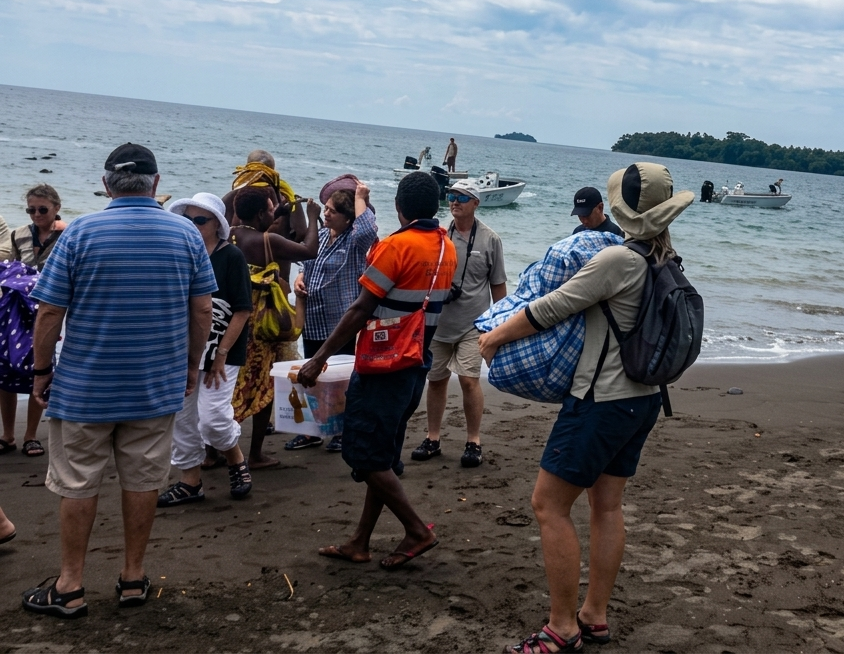
Pack light - space is limited on regional flights and boats. Bring essentials and anything you rely on daily.
- Lightweight, breathable clothing + modest evening outfit
- Rain jacket or poncho
- Broken-in walking shoes + water shoes
- Sun protection (reef-safe sunscreen, hat, sunglasses)
- Insect repellent and any malaria prevention prescribed
- Personal meds + compact first-aid kit
- Toiletries and hygiene items (limited locally)
- Phone/camera chargers + small headlamp
- Reusable water bottle and dry bags
- Passport, insurance, and vaccination records
Safety & Security
Tavolo is generally safe. Remote location and tight-knit communities reduce crime risks significantly. However, as anywhere, use common sense.
Safety Guidance:
- Secure Valuables: Use room lockable storage; don't leave expensive items unattended
- Organized Groups: Always participate in guided activities; don't wander alone
- Emergency Procedure: Know how to contact guides and emergency services. Satellite communication available.
- Sun Protection: Equatorial sun is intense; apply sunscreen frequently, wear hat, limit midday exposure
- Water Safety: Drink only purified water; avoid ice unless confirmed purified water source
- Food Safety: All prepared food is safe; avoid street food or unknown sources
Frequently Asked Questions
Q: What's the weather like?
A: Tropical climate - warm year-round (26-31C / 79-88F). Dry season (May-October) is usually calmer, while rainy season (November-April) brings frequent showers.
Q: Do I need my own snorkel/dive gear?
A: No, we provide snorkel equipment. Bring your own if you prefer a specific fit. Scuba arrangements can be coordinated in advance.
Q: What's the internet situation?
A: No connection, However, there are certain areas where a network signal may be available, and you may be able to connect to the internet when coverage is present
Q: How many people are typically in a group?
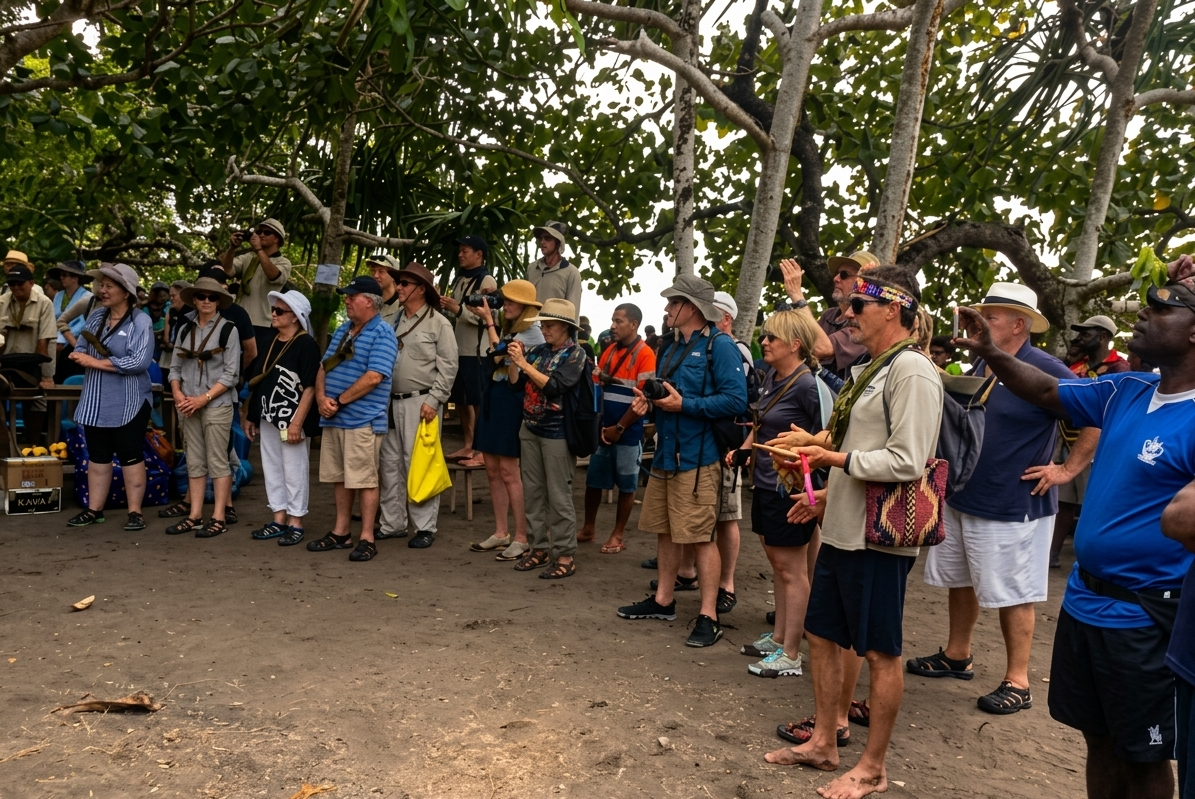
A: Groups are typically 4-8 people for guided activities. Private arrangements may be available.
Q: What if I have dietary restrictions?
A: Vegetarian meals are easy to accommodate. Vegan options are possible with advance notice. Share allergies early.
Q: Is this suitable for children?
A: Age 12+ is generally recommended, but younger children may join with parents depending on itinerary.
Q: What's the currency situation?
A: PNG Kina (PGK) is the local currency. Bring cash as ATM availability is limited in remote areas.
Q: How do you handle environmental impact?
A: We use reef-friendly practices, limit group sizes, and prioritize local hiring and conservation funding.